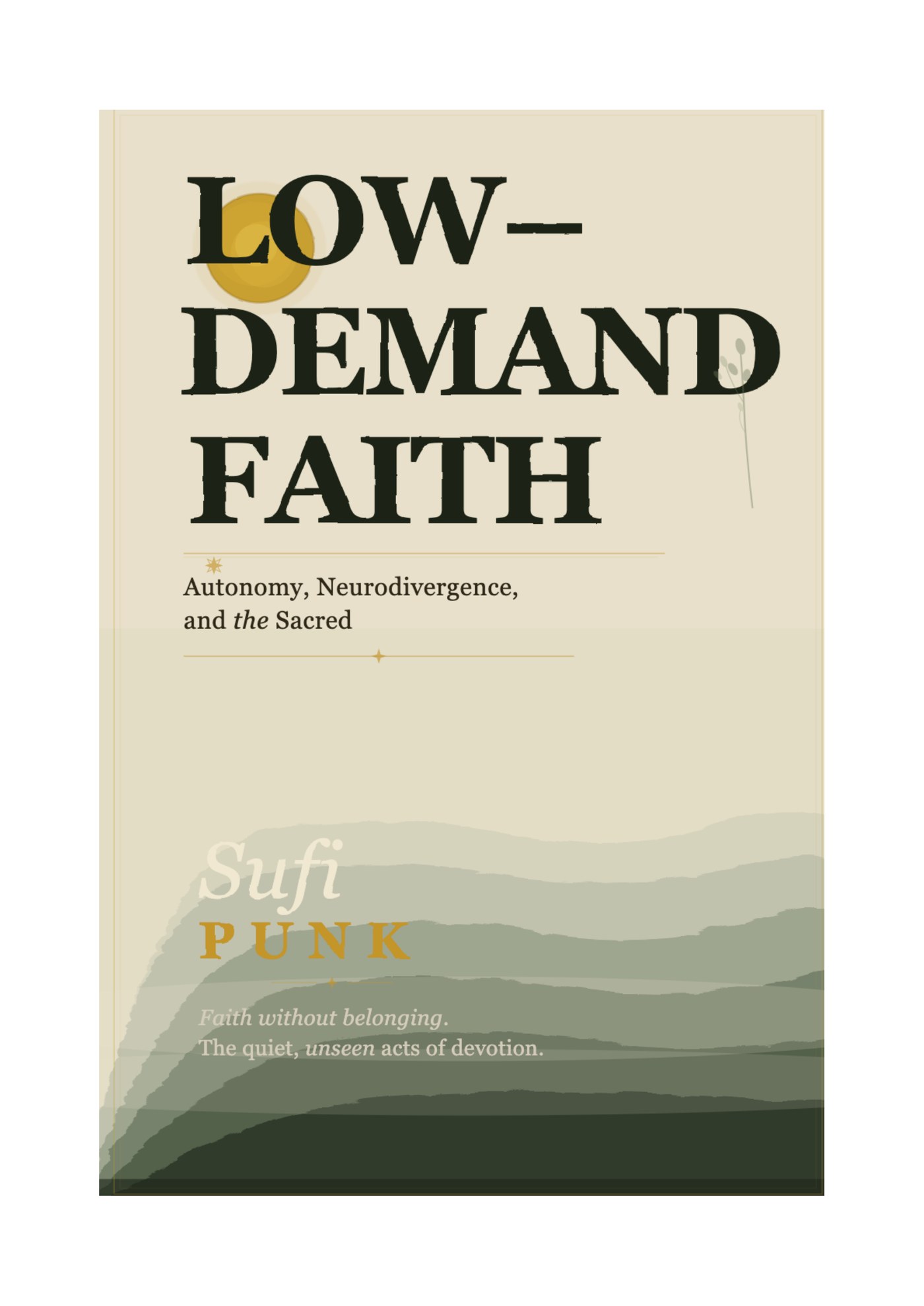
Low-Demand Faith arises from a growing crisis of belonging within religious and spiritual spaces, particularly for neurodivergent people, trauma survivors, and others whose nervous systems do not tolerate coercion. At a time when faith is often framed through performance, certainty, and compliance, this book holds a different orientation: faith as relationship, safety, and consent.
Drawing on lived experience rather than doctrine, it names how harm is frequently spiritualised, and how many people leave faith quietly. Not because they reject God, but because their bodies cannot survive the way belief is delivered.
It takes shape in a period of deep social division, when religious difference is increasingly politicised, and Muslim identities in particular are subject to suspicion, fear, and misrepresentation. Low-Demand Faith holds this intersection with care, honesty, and restraint.